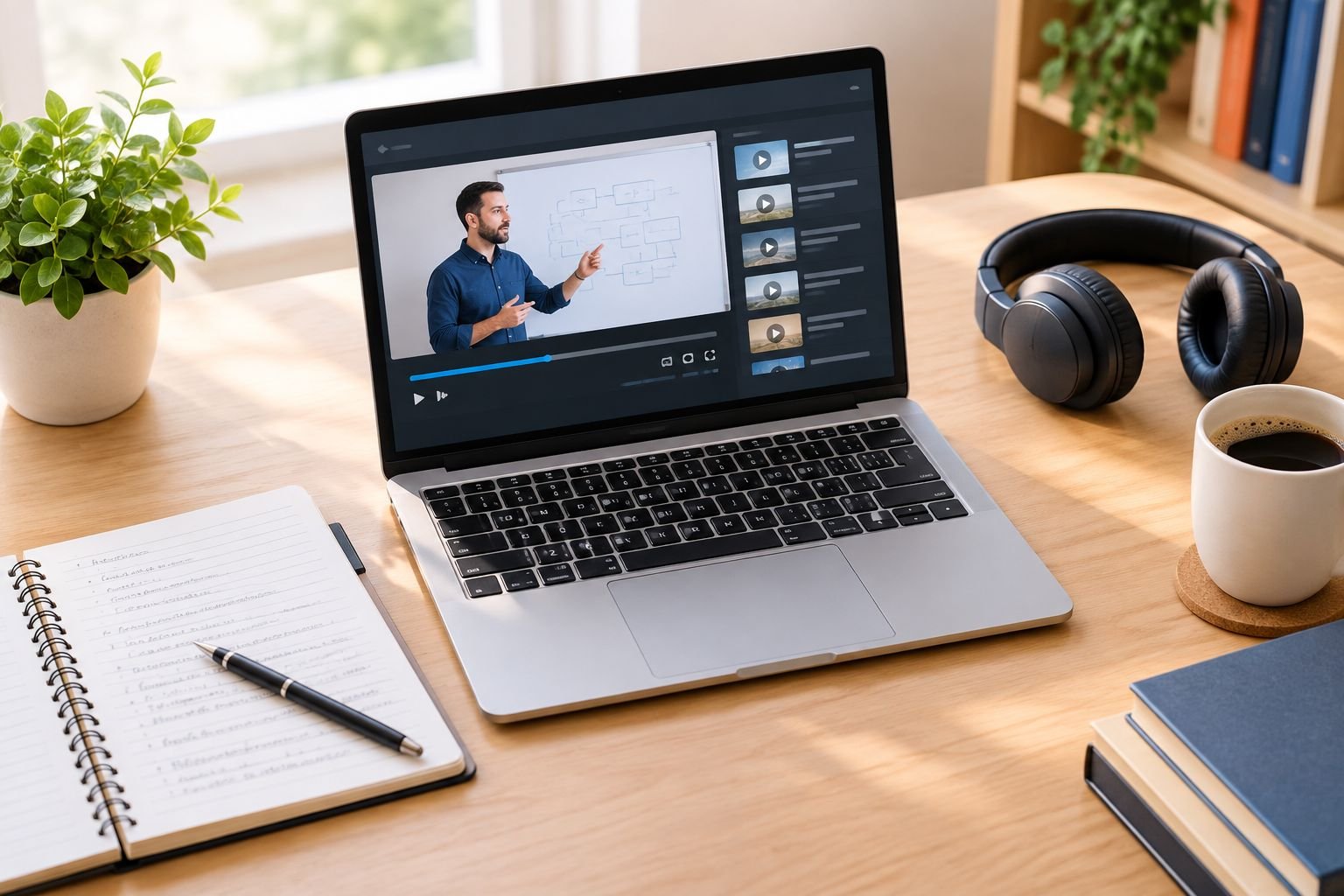
Let's break down what actually matters here, instead of relying on outdated assumptions from a decade ago.
## The Stigma Is Real, But It's Fading
There's no pretending the stigma never existed. Online degrees used to be associated with diploma mills, and for a while, that reputation stuck to legitimate online programs too. Employers who weren't familiar with online education sometimes assumed it meant a lower-quality, less rigorous experience.
That perception has shifted a lot, especially since the pandemic pushed millions of people, including plenty of hiring managers themselves, into remote learning and remote work. Many employers now have firsthand experience with online coursework, either their own or a colleague's, which has made the format feel far less unusual than it once did.
## What Actually Matters More Than "Online vs. In-Person"
Here's the part that gets lost in most debates about online degrees: employers generally care more about the substance behind the degree than the delivery method. Specifically:
- **The reputation of the institution.** An online degree from a well-known, accredited university (especially one that also offers the same program on campus) tends to carry the same weight as its in-person equivalent.
- **Accreditation.** A properly accredited program matters far more than whether classes were on Zoom or in a lecture hall. Unaccredited or "too good to be true" programs are the real red flag, not the online format itself.
- **Relevant skills and experience.** For a lot of roles, especially in tech, business, and creative fields, what you can actually do often outweighs how you learned to do it.
- **How you talk about it in interviews.** Confidence and clarity about what you learned and how you applied it matter more than pre-emptively explaining or apologizing for the format.
## It Varies a Lot by Industry
Some fields are far more accepting of online degrees than others.
**More accepting:** tech, business, marketing, IT, healthcare administration, and many graduate-level programs, especially MBAs, where online and hybrid formats are now extremely common even at top schools.
**More cautious:** certain licensed professions (like nursing, law, or clinical psychology) where hands-on training, in-person practicums, or state licensing requirements make the format more scrutinized, though many of these fields still offer respected hybrid programs that combine online coursework with required in-person components.
If you're choosing a program, it's worth researching how your specific field and target employers tend to view online formats, rather than assuming the answer is the same across every industry.
## Large, Well-Known Universities Have Changed the Game
A major shift in recent years is that many prestigious, well-established universities now offer online degree programs themselves, sometimes with the exact same curriculum, professors, and degree title as their in-person program. When an employer sees a degree from a respected university, many won't even notice, or care, that it was completed online, especially if the diploma doesn't explicitly say so.
This has done a lot to close the gap between how online and traditional degrees are perceived, especially for graduate and professional programs.
## What Still Raises Red Flags
To be fair, not all online degrees are viewed equally, and some things still make employers cautious:
- Degrees from unaccredited or unfamiliar institutions
- Programs advertised as "fast" or "guaranteed" with little academic rigor
- A resume that reads as if the degree was collected quickly without real skill development to back it up
- Vague answers in interviews about what was actually learned or accomplished
None of these issues are unique to online degrees specifically, but they tend to get more scrutiny when paired with an unfamiliar or non-traditional format.
## How to Make Your Online Degree Work in Your Favor
If you already have, or are pursuing, an online degree, there are ways to strengthen how it's perceived:
- Choose accredited, reputable institutions, ideally ones that also offer the same degree in person.
- Build a portfolio or set of real projects alongside your coursework, especially in fields like design, marketing, or tech.
- Be ready to speak confidently about what you learned and how it applies to the role, rather than focusing on the format.
- List your degree the same way you would any other, without over-explaining or apologizing for it being earned online.
At the end of the day, most employers are looking for evidence that you can do the job well. The delivery method of your education is usually just one small piece of that picture.
Online degrees aren't automatically taken less seriously anymore, but they're also not automatically equal to every traditional degree by default. It really comes down to the reputation of the school, the legitimacy of the program, and how well you can demonstrate the skills and knowledge you gained. Choose a credible program, build real experience alongside it, and let your abilities do most of the talking. That matters far more than where you happened to sit while you earned your degree.
Frequently Asked Questions
How do I comment on a Articlesblog article?
Scroll to the Comments section at the bottom of any article, enter your name, email, and message, and click Post Comment. No account is needed, but every comment is moderated — it appears publicly only after the editorial team approves it. See the Privacy Policy for how details are handled.
Why hasn't my comment appeared?
Comments are held for review by default. If yours has not appeared, it is still pending or was rejected during moderation; approved comments appear on the article automatically. If it has been waiting more than a day or two, send a note through the contact page.
How do I share a Articlesblog article?
Every article has a share bar with buttons for Facebook, X, Pinterest, LinkedIn, WhatsApp, Threads, Instagram, TikTok, and YouTube, plus a Copy Link button. Clicking a button opens that network's share window with the article link and title already filled in.
How does Articlesblog pick related articles?
The Related Articles sidebar and the More to Read section show up to four other published articles from the same category, ranked by view count, with popular articles from elsewhere on the site added when the category is new. Tags under each article link to related searches.
Does an article show when it was last updated?
Article pages show the author, publish date, reading time, and view count. A separate last-updated date is not displayed at present, so treat the publish date as the article's currency. Ask the team about a specific article's revision history via the contact page.




Comments (0)
Be the first to comment!
Leave a Comment