
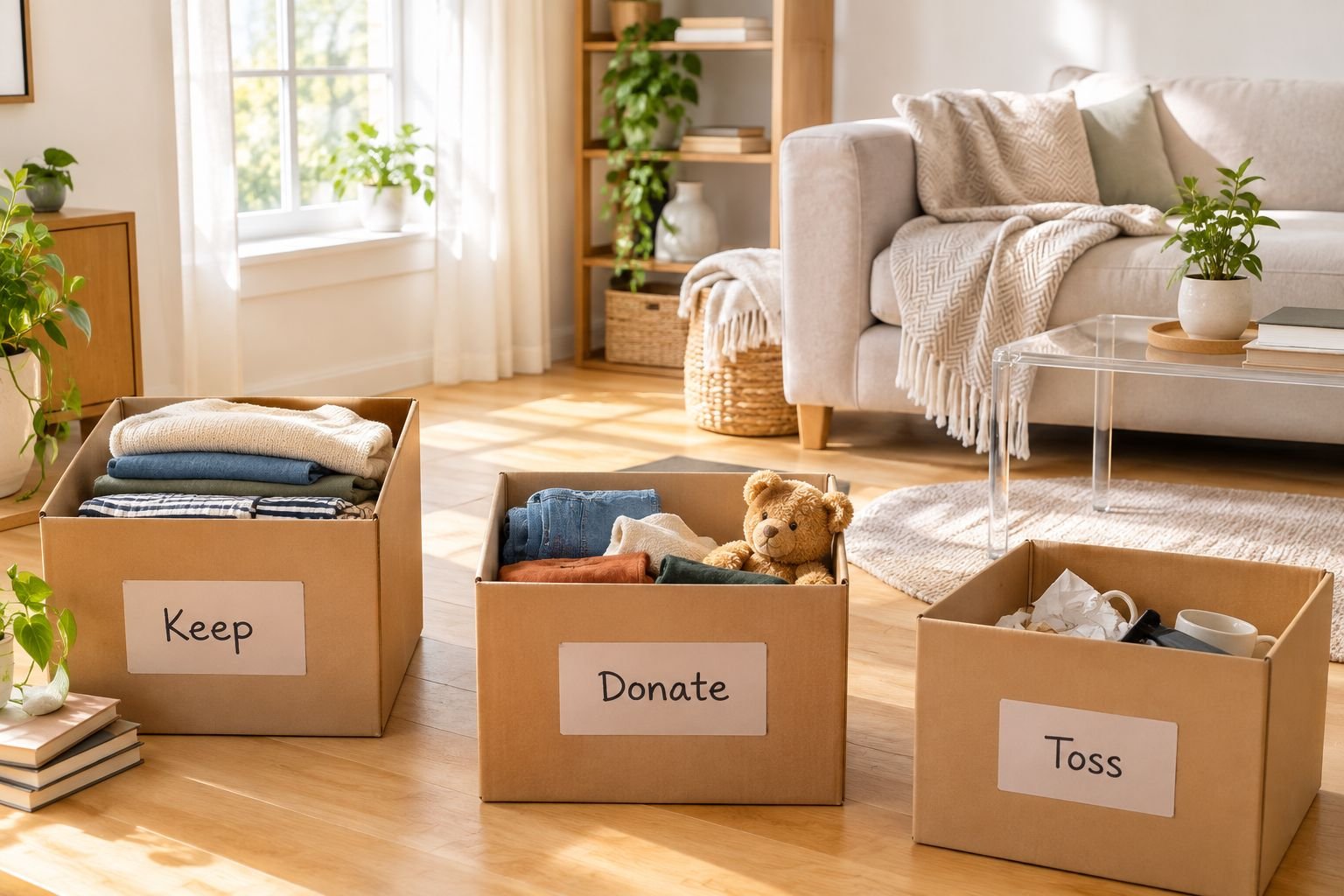
The good news is you don't need a weekend-long purge or a dumpster in your driveway to fix it. You just need a plan — and the plan is simpler than you think. Go room by room. Small wins add up fast, and you'll actually finish instead of burning out halfway through the living room.
Here's how to tackle every space in your home, one at a time.
This is the first thing you see when you walk in, and it sets the tone for the whole house. Usually it's a dumping ground for shoes, mail, keys, and jackets nobody hangs up.
- Set up a small basket or tray for keys, wallets, and sunglasses so they stop ending up on random surfaces.
- Sort through shoes — keep what you actually wear, donate the rest.
- Deal with mail immediately. If you're not going to read it, recycle it. Don't let it pile into a "someday" stack.
- Add a hook or two if jackets keep landing on chairs instead of closets.
Five minutes a day here keeps this space from spiraling again.
## Living Room: Clear the Surfaces First
The living room fills up fast because it's where everyone hangs out — remotes, blankets, chargers, random cups, kids' toys, that one book you meant to finish in 2023.
- Clear every flat surface (coffee table, side tables, TV stand) and only put back what belongs there.
- Go through media and cords — if you don't know what it powers, it probably doesn't need to stay.
- Rotate toys or books if kids share this space, so it doesn't turn into a second playroom.
- Ask yourself with décor and knick-knacks: does this still feel like "me," or is it just here out of habit?
A living room should feel like a place to relax, not a place with visual noise everywhere you look.
## Kitchen: Function Over Everything
Kitchens accumulate duplicates — three spatulas, four half-used spice jars, containers with no matching lids. The fix here isn't about making it Pinterest-pretty, it's about making it work.
- Pull everything out of one drawer or cabinet at a time. Trying to do the whole kitchen at once is how people give up by lunchtime.
- Get rid of duplicate gadgets. You don't need two garlic presses.
- Toss expired pantry items and anything you forgot you had.
- Keep counters as clear as possible — appliances you use daily can stay out, everything else goes in a cabinet.
A decluttered kitchen genuinely makes cooking feel less like a chore.
## Bedroom: Make It a Place to Actually Rest
Your bedroom should be the calmest room in the house, but it's often where clutter hides best — under the bed, on the dresser, in that chair that's somehow always covered in clothes.
- Start with the "chair pile." Everything gets put away, hung up, or laundered.
- Check under the bed. If it's full of things you forgot existed, it's time to sort.
- Clear the nightstand down to what you actually use before sleep.
- Keep the dresser top nearly empty — it makes the whole room feel lighter instantly.
## Closet: The Clothes You Actually Wear
This is usually the most emotional room to declutter, so give yourself a little extra time here.
- Take everything out and only put back clothes that fit, that you like, and that you've worn in the last year.
- Be honest about "someday" clothes — someday rarely comes.
- Donate anything in good condition instead of letting it sit in a bag by the door for six months.
- Organize by category (tops, bottoms, dresses) so you can actually see what you own.
## Bathroom: Small Space, Big Payoff
Bathrooms are quick to declutter and the results feel amazing almost instantly.
- Check expiration dates on makeup, sunscreen, and medications.
- Get rid of half-used products you didn't like and never finished.
- Keep countertops clear — store daily items in a drawer or small tray instead.
- Toss old towels that have gone thin or scratchy.
## Home Office: Clear Desk, Clear Head
Whether it's a full office or a corner of the dining room, this space affects how well you focus.
- Sort paperwork into keep, shred, and recycle. Most of it can go.
- Untangle and label cords, or get rid of ones for devices you no longer own.
- Keep only what you use daily within arm's reach; everything else goes in a drawer.
- Digitize what you can instead of keeping physical copies "just in case."
## Kids' Rooms: Involve Them (Even a Little)
Kids' spaces fill up fast with toys, art projects, and clothes they've outgrown. Letting them help — even just choosing what to donate — makes the process smoother and teaches them the habit early.
- Rotate toys instead of keeping everything out at once.
- Sort clothes by season and size, and pass down or donate what no longer fits.
- Keep art supplies in one bin instead of scattered across the room.
- Let go of duplicate stuffed animals and broken toys guilt-free.
## Garage, Storage Room, or Basement: Save This for Last
This is usually the biggest job, so it's smart to tackle it after you've built some decluttering momentum in the rest of the house.
- Group items into categories: tools, seasonal decorations, sports gear, "maybe" items.
- Give everything a designated spot instead of just a general area.
- Set a real deadline for the "maybe" box — if it's not used in 3-6 months, let it go.
- Use shelving or bins to keep things off the floor and easy to find.
## Keeping It Decluttered Long-Term
Decluttering once feels great, but keeping it that way is the real win. A few habits make a huge difference:
- Do a quick 10-minute reset each evening — put things back where they belong.
- Follow a one-in-one-out rule for new purchases, especially clothes and gadgets.
- Do a mini declutter every season instead of waiting for it to pile up again.
- Don't aim for perfect. Aim for "easy to live in."
## Final Thought
Decluttering isn't really about having an empty, sterile-looking house. It's about making room — literally and mentally — for the things that actually matter to you. Take it room by room, don't rush it, and don't judge yourself for how it got messy in the first place. Every home does. The point is just to start.
Frequently Asked Questions
How do I comment on a Articlesblog article?
Scroll to the Comments section at the bottom of any article, enter your name, email, and message, and click Post Comment. No account is needed, but every comment is moderated — it appears publicly only after the editorial team approves it. See the Privacy Policy for how details are handled.
Why hasn't my comment appeared?
Comments are held for review by default. If yours has not appeared, it is still pending or was rejected during moderation; approved comments appear on the article automatically. If it has been waiting more than a day or two, send a note through the contact page.
How do I share a Articlesblog article?
Every article has a share bar with buttons for Facebook, X, Pinterest, LinkedIn, WhatsApp, Threads, Instagram, TikTok, and YouTube, plus a Copy Link button. Clicking a button opens that network's share window with the article link and title already filled in.
How does Articlesblog pick related articles?
The Related Articles sidebar and the More to Read section show up to four other published articles from the same category, ranked by view count, with popular articles from elsewhere on the site added when the category is new. Tags under each article link to related searches.
Does an article show when it was last updated?
Article pages show the author, publish date, reading time, and view count. A separate last-updated date is not displayed at present, so treat the publish date as the article's currency. Ask the team about a specific article's revision history via the contact page.




Comments (0)
Be the first to comment!
Leave a Comment