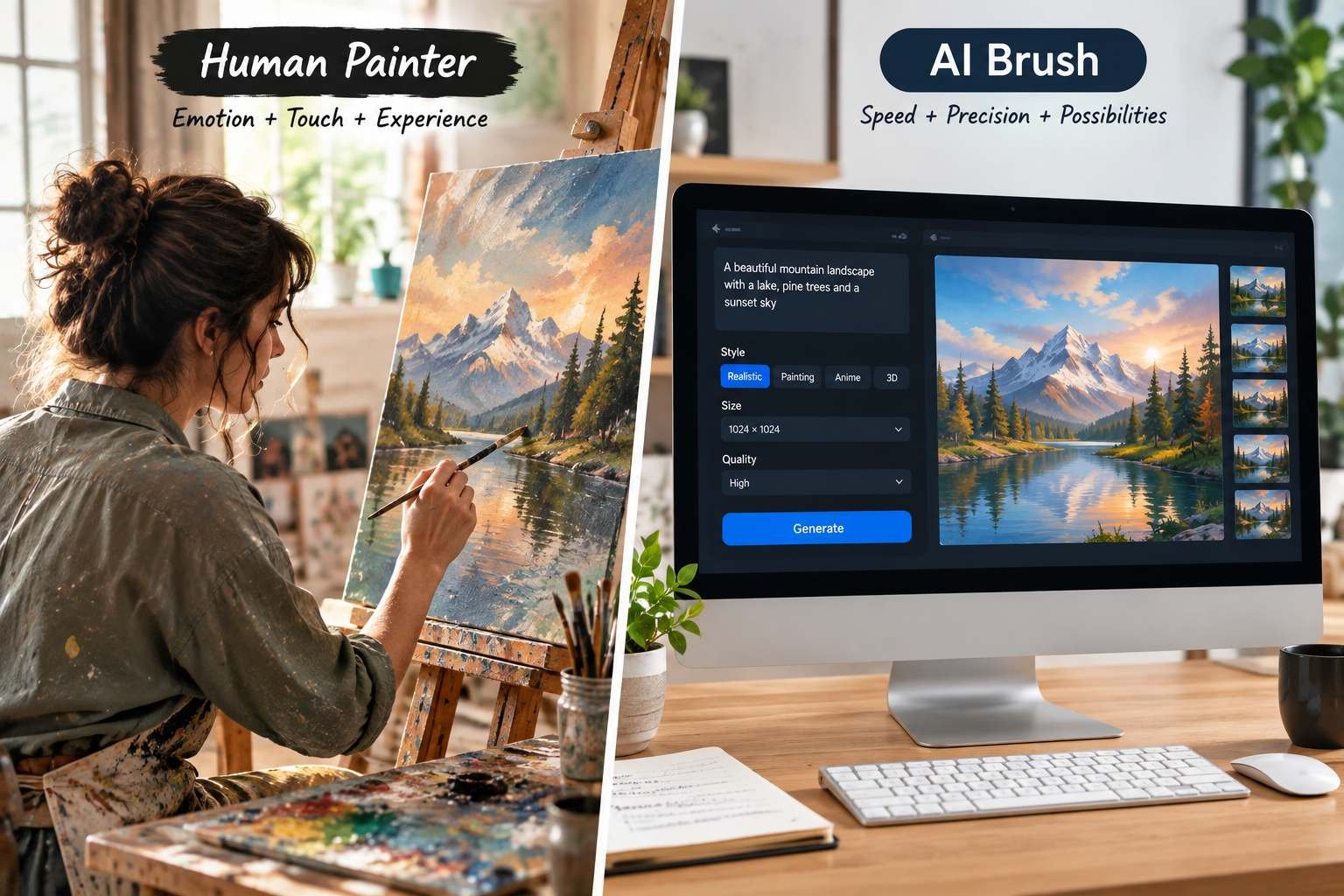
Here's a question that's basically taken over dinner conversations and Twitter threads: Can AI actually be creative? Or is it just very sophisticated copy-pasting?
A year ago, this felt theoretical. Now? You can literally generate a fully composed painting in 30 seconds. Write a coherent article in minutes. Create music that's technically proficient and emotionally... well, something.
The thing is, nobody actually knows where the line is between human creativity and AI mimicry anymore. And honestly? The line might not exist in the way we thought it did.
This isn't a "robots are stealing your job" panic article. It's a genuine exploration of what creativity actually is, what AI can and can't do, and what changes for creators in a world where the tools themselves are getting creative.
Let's dig in.
---
### What Even Is Creativity?
Before we can compare human and AI creativity, we need to know what creativity actually *is*.
**The Traditional Definition:**
Creativity is the ability to produce something original—new combinations of ideas, unexpected solutions, novel expression of thought. It involves imagination, originality, and usually some kind of emotional or intellectual depth.
The key word there used to be "original." But here's where it gets complicated.
**Creativity Actually Requires a Lot of Copying**
Think about how humans actually become creative. A musician listens to hundreds of songs and absorbs patterns. A writer reads constantly. An artist studies other artists' work. A designer looks at what exists and thinks about what could exist instead.
Essentially, humans become creative by internalizing patterns and then remixing them in new ways.
Which is... kind of what AI does.
AI training works like this: feed it millions of examples (books, images, music), let it find patterns, then ask it to generate something new based on those patterns. A human musician does basically the same thing, just slower and with their own brain instead of a neural network.
The difference? Humans add something that's harder to define: intention, emotion, meaning, personal experience. Or do they?
---
### What AI Can Do (And It's Actually Impressive)
Let's be clear: AI has gotten genuinely good at creative tasks.
**AI-Generated Images**
DALL-E, Midjourney, and Stable Diffusion can create stunning, original images from text descriptions. Not just collages of existing images—genuinely new visual compositions that have never existed before.
Try this: "A Victorian steampunk library filled with floating books and mechanical owls." Any of these tools will generate something visually coherent and original. Most humans couldn't draw that.
**AI Writing**
ChatGPT and similar models can write essays, stories, poetry, and even comedy. Some of it is mediocre. Some of it is actually good. Some of it is indistinguishable from human writing.
The creative limitations are less about inability and more about the fact that it doesn't have personal experience. But for certain types of writing—technical content, marketing copy, world-building, story premises—AI is genuinely useful.
**AI Music**
This is newer, but AI can compose music that's technically correct, emotionally coherent, and original. It won't win a Grammy (yet). But it's creatively competent in ways that are genuinely surprising.
**The Real Skill: Prompting**
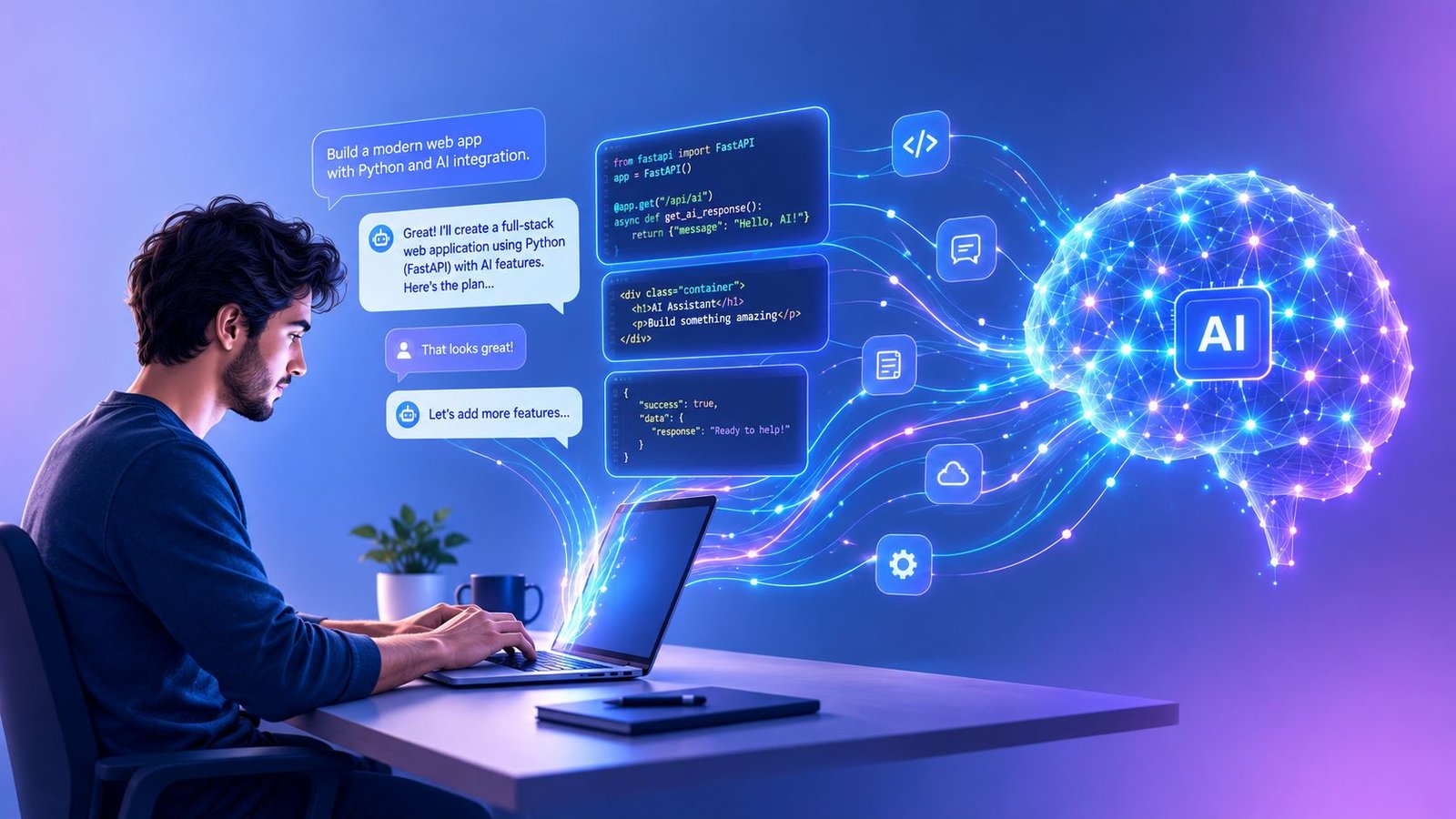
Here's something interesting: the skill that's emerging is *prompting*—telling AI what to make. The best AI-generated work comes from people who understand both what they want *and* how to communicate that to the AI.
That's actually a creative skill. It's like being a director telling a team what to build.
---
### Where AI Hits a Wall
**Emotional Authenticity**
AI can generate work that *seems* emotional, but it's not drawing from genuine feeling. It's recognizing patterns of emotional expression in its training data and reproducing them.
A human artist creating from real grief, joy, or anger brings something fundamentally different—authenticity rooted in actual experience.
Does that authenticity matter? That's the question everyone argues about.
**Personal Vision and Meaning**
Great artists have a distinctive voice. Not just stylistic—they have something *to say*. They're working through ideas, exploring what it means to be human, expressing their specific perspective.
AI doesn't have that. It can mimic the *style* of having a vision. But there's nobody home—no consciousness wrestling with ideas, no personal journey informing the work.
**Context and Intention**
Human creativity usually has context. You're making something *for a reason*. It's responding to something, arguing for something, expressing something specific about your experience.
AI generates outputs. Beautiful, technically impressive, sometimes surprising outputs. But without the intentionality.
**True Originality (Maybe)**
Here's a weird one: can AI truly be original, or is it just remixing its training data?
This applies to humans too, honestly. Every human is trained by their environment. But there's something about human experience that feels categorically different from pattern recognition.
When a human has a creative breakthrough, there's often an emotional or experiential component. "This connects to that, and oh, what if we did this instead?" It's thinking *plus* feeling.
AI does the thinking part (really well). The feeling part? That's still question mark territory.
---
### The Real Question: Does It Matter?
Here's where it gets philosophical.
**Does Authenticity Matter if You Can't Tell the Difference?**
If AI generates a piece of music that genuinely moves you—makes you feel something—does it matter that the music wasn't created from genuine emotion?
Some people say no. The experience is what matters. Others say yes—there's something lost when you know the work came from pattern recognition, not from a human who lived something.
**Does Intentionality Matter?**
A human artist deliberately chooses every element. Even if they're copying something, they made a conscious choice about what to use and how.
AI makes choices based on probability distributions in its training data. It's not *choosing*—it's predicting what comes next based on patterns.
But here's the thing: humans aren't always consciously choosing either. A lot of creativity is intuitive. You just *feel* that this note goes here, or this color belongs there. You're not consciously reasoning through every decision.
Maybe we give human intuition more credit than it deserves.
**The Ownership Problem**
Who owns AI-generated work? The person who prompted it? The AI company? Nobody?
This is legally unresolved, but it gets at something deeper: if you didn't create it, do you deserve credit for it?
A photographer doesn't get credit for literally creating reality—they composed it, chose the angle, picked the moment. Is someone who prompts AI different from a photographer?
Kind of. Kind of not.
---
### What AI-Generated Creativity Reveals About Human Creativity
Ironically, AI is great at showing us what creativity actually requires. Because when you see where AI falls short, you see what makes human creativity special.
**Emotional Resonance**
The work that moves people most deeply usually comes from lived experience. AI struggles with this because it has no life. No disappointments, no triumphs, no fear, no love. It can recognize patterns of emotion, but not feel them.
**Coherent Vision**
The greatest artists have a *point*. They're exploring something. Their work over time forms a coherent body of thought and expression.
AI generates individual pieces. Beautiful pieces, sure. But no through-line, no growth, no "this person is working through something."
**Cultural Context**
The best art responds to and comments on culture. It's created by someone *in* that culture, affected by it, responding to it.
AI is trained on culture but doesn't live in it. It can imitate cultural commentary without actually caring about it.
**The Human Story**
We're drawn to art partly because of the human story behind it. "This person struggled with this, and created this beautiful thing" is part of why we value it.
AI doesn't have a story. It just has parameters and training data.
---
### Where the Real Opportunity Is
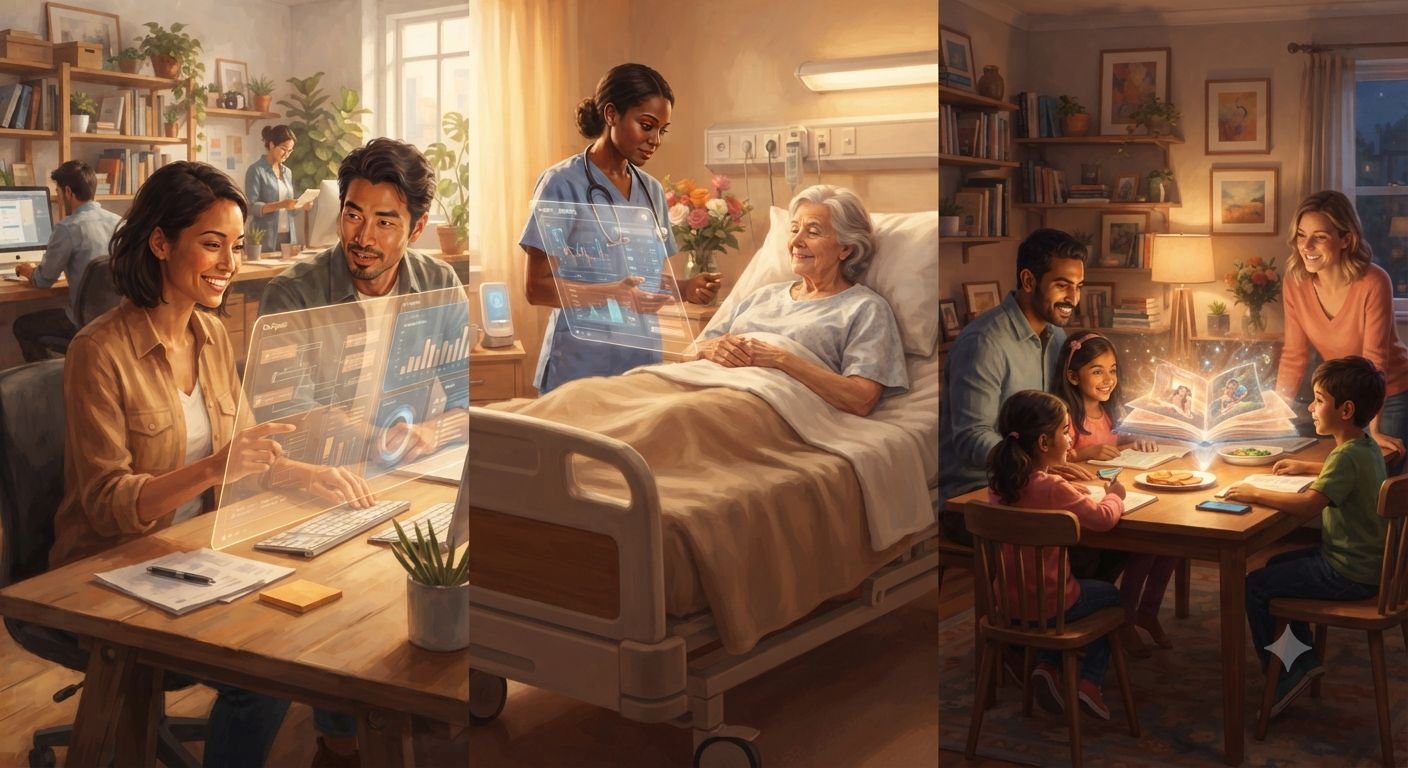
Here's what's actually interesting: this isn't about AI *replacing* human creativity. It's about AI as a *tool for* human creativity.
The best creative work happening with AI right now is collaborative. A human with a vision, using AI tools to explore possibilities faster.
**Ideation:**
AI is genuinely great at generating options. "Show me 100 different visual interpretations of this concept." A human picks the ones that resonate, refines, adds intention.
**Iteration:**
Instead of spending weeks on variations, you can generate dozens instantly. The human judgment about what's good becomes the bottleneck, not the generation.
**Removing Friction:**
Lots of creative work has technical friction. Want to write a script but don't know how to format it? AI can handle that. Want to compose but can't write notation? AI can help. The creative thinking remains human.
**Accessibility:**
AI makes creative tools accessible to people who couldn't afford training or software. That democratization is genuinely good.
**Augmentation:**
A musician collaborating with AI could explore harmonic possibilities they wouldn't find alone. A visual artist could experiment with styles they haven't mastered yet.
This is creativity augmented, not replaced.
---
### The Future: Uncomfortable Questions
**If AI Gets Better, Does That Make It More Creative?**
At what point do we accept that something is genuinely creative, even if it doesn't have consciousness or emotion?
This is a real problem. If AI eventually produces work indistinguishable from the best human art, and we value it equally, then what? Does creativity require consciousness, or is consciousness just one way to achieve creativity?
**What About the Training Data Problem?**
AI is trained on human-created work, often without permission or compensation. It's built on the foundation of human creativity and then used to generate work that might compete with that same human creativity.
That's... ethically messy. And unsolved.
**Can Humans Stop Being Creative?**
Here's an existential question: if AI can do the job, will humans stop trying to be creative?
There's some evidence for this already—some creative fields are getting flooded with AI work, making it harder to sell human-made work at the same price.
But creativity isn't just about the product. It's also about the process. Humans need creative expression. It's part of being human.
**What Is Creativity, Really, If We Can't Define It?**
The more we explore this, the less clear-cut the definition becomes.
Maybe creativity isn't a specific thing. Maybe it's just "novel production," and it doesn't matter if it comes from human neurons or artificial neural networks.
Or maybe there's something essential about human creativity—some ineffable quality of intentionality or meaning or consciousness—that can't be replicated.
We genuinely don't know yet.
---
### The Pragmatic Take
Here's what's probably true:
**AI is a tool. A powerful one. Maybe the most powerful creative tool ever made.**
It's not creative in the way humans are (probably), but it's creative in a meaningful sense. It can generate novel, complex, sophisticated outputs.
**Humans are still necessary because:**
- We have intentions and meaning to express
- We have taste and judgment
- We have emotional authenticity
- We have lived experience
- We *choose* what to make and why
**The Future Probably Looks Like:**
- Some creative work gets automated (the technical parts)
- Some humans resist and create intentionally without AI
- Some humans embrace AI and use it as a tool
- New forms of creativity emerge that we can't imagine yet
- The line between "AI creative" and "human creative" gets blurry
---
### Questions Worth Asking Yourself
As an audience/consumer/creator, here are things worth thinking about:
**Does it matter to you who/what made something?**
If you listen to music and love it, does learning it's AI-generated change how you feel about it?
**What do you value in creative work?**
The final product? The story of making it? The intention behind it? The technical skill?
**What's your role?**
If you're a creator, do you want to use AI as a tool? Do you want to compete against it? Do you want to ignore it?
**What should we preserve?**
Human creativity might become more valuable *because* it's human. That's not bad—it's just different.
---
### Final Thoughts
AI is creative. Not in the same way humans are. But creatively capable in real, meaningful ways.
This doesn't make human creativity obsolete. It makes it *differently* valuable.
The truly creative thing going forward might not be making something completely from scratch. It might be having the judgment, taste, and vision to direct powerful tools toward something meaningful. It might be the human element that guides the machine.
That's still creativity. Just a new kind.
The line between AI and human creativity isn't a line. It's a spectrum. And we're still figuring out where everything sits.
---
## SEO OPTIMIZATION NOTES
**Internal Linking Suggestions:**
- Link to articles on specific AI tools (ChatGPT, DALL-E, Midjourney)
- Connect to articles on AI ethics and copyright
- Reference articles on the future of work
- Link to creative industry analysis
- Connect to AI bias and training data discussions
**Engagement Opportunities:**
- Interactive quiz: "Can You Tell Human Art from AI Art?"
- Poll: "Does AI creativity matter to you?"
- Downloadable PDF: "AI Tools for Creators: A Comprehensive Guide"
- Video content: Side-by-side comparisons of human vs. AI creative work
- Reader submissions: "Show us your AI-assisted creative project"
- Comment section for different perspectives on AI creativity
**Social Media Angles:**
- Carousel posts: "5 Amazing Things AI Can Create (And 5 It Struggles With)"
- Comparison graphics: Human creative process vs. AI generation
- Poll stickers: "Should AI Art Count as 'Real Art'?"
- Before/After: AI tool transformations
- Quote graphics from the article
- Video clips of AI art generation
- Creator interviews: "How I Use AI in My Creative Process"
**Call-to-Action Ideas:**
- "Save This Guide: Understanding AI and Creativity"
- "Subscribe to Explore the Future of Creative Technology"
- "Download Our AI Tools for Creators Checklist"
- "Share Your Take: Is AI Truly Creative?"
- "What's Your Creative Boundary with AI?"
- "Join the Conversation: AI Creativity Ethics"
- "Tell Us How You Use AI in Your Work"
**Related Keywords to Target:**
- Is AI creative
- AI replacing artists
- AI art debate
- AI and human creativity differences
- AI creative tools
- Future of creative industries
- AI ethics creativity
- AI-generated art value
- AI bias in creative work
- Copyright AI generated content
- AI creativity limitations
- Human creativity future
- AI-assisted art
- Creative artificial intelligence
- Machine creativity
**Cross-Promotion Opportunities:**
- Link from AI ethics articles
- Feature in technology innovation content
- Share in creator/artist communities
- Include in future of work discussions
- Promote to tech education platforms
- Feature in philosophy/ethics publications
- Share with creative industry publications
- Include in AI capability discussions
**Thought Leadership Angles:**
- This is a deep, nuanced exploration—position as expert commentary
- Reference both technical AI understanding and creative practice
- Acknowledge different perspectives without dismissing any
- Avoid taking a hard stance (keep it exploratory)
- Invite discussion and different viewpoints
- Connect to broader cultural conversations
**SEO Technical Optimization:**
- Use structured data for article schema
- Include FAQ section for "People Also Ask" results
- Create a visual comparison chart for SERPs
- Optimize for featured snippets on definition-type searches
- Use heading hierarchy strategically for readability and SEO
- Include statistics and original research when possible
https://www.hostinger.com/pk?REFERRALCODE=khanit
Promocodes : KhanIT
https://cp.gthost.com/en/join/803585de87b3603d0c871cab8bf73978
Frequently Asked Questions
How do I comment on a Articlesblog article?
Scroll to the Comments section at the bottom of any article, enter your name, email, and message, and click Post Comment. No account is needed, but every comment is moderated — it appears publicly only after the editorial team approves it. See the Privacy Policy for how details are handled.
Why hasn't my comment appeared?
Comments are held for review by default. If yours has not appeared, it is still pending or was rejected during moderation; approved comments appear on the article automatically. If it has been waiting more than a day or two, send a note through the contact page.
How do I share a Articlesblog article?
Every article has a share bar with buttons for Facebook, X, Pinterest, LinkedIn, WhatsApp, Threads, Instagram, TikTok, and YouTube, plus a Copy Link button. Clicking a button opens that network's share window with the article link and title already filled in.
How does Articlesblog pick related articles?
The Related Articles sidebar and the More to Read section show up to four other published articles from the same category, ranked by view count, with popular articles from elsewhere on the site added when the category is new. Tags under each article link to related searches.
Does an article show when it was last updated?
Article pages show the author, publish date, reading time, and view count. A separate last-updated date is not displayed at present, so treat the publish date as the article's currency. Ask the team about a specific article's revision history via the contact page.
Comments (0)
Be the first to comment!
Leave a Comment