
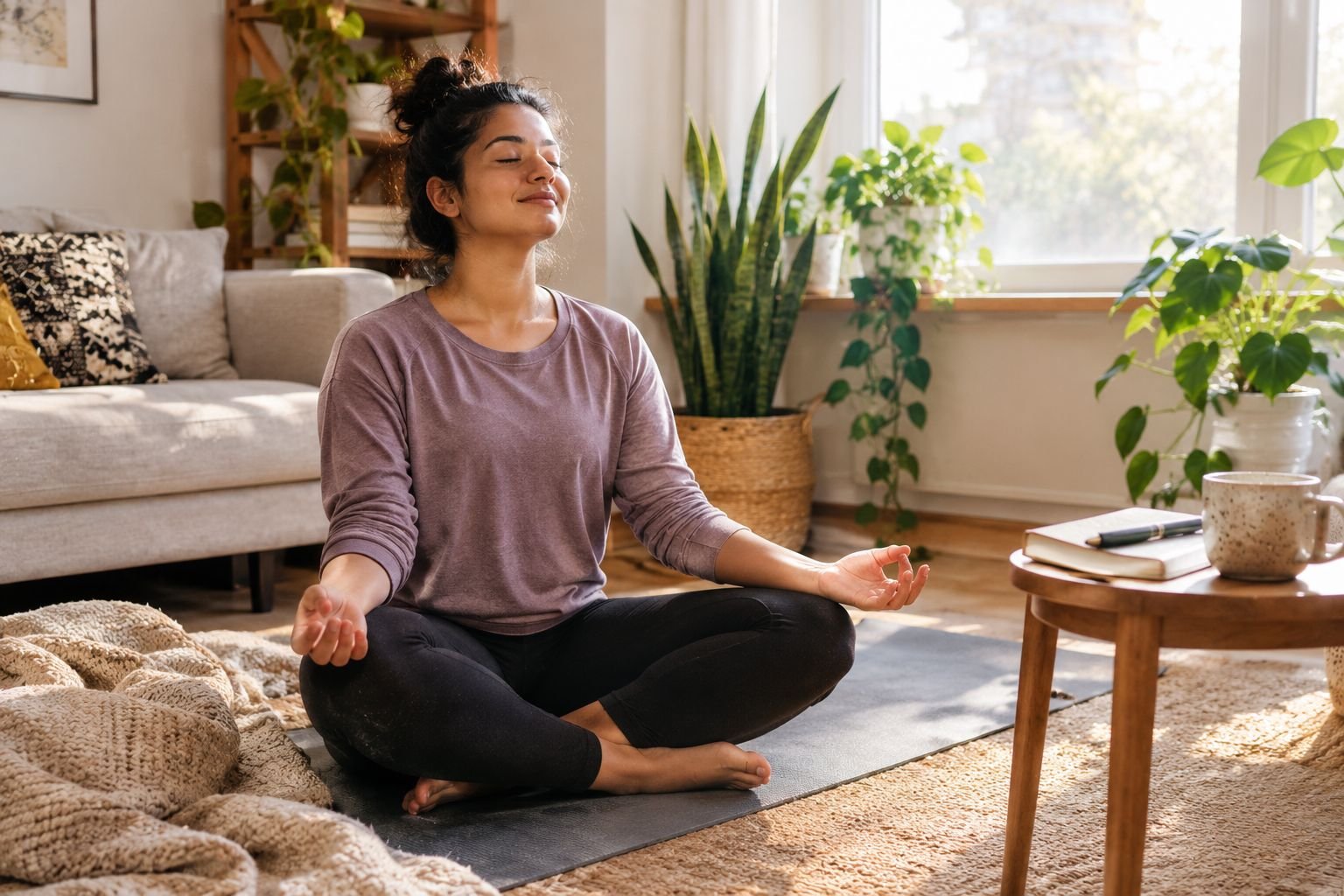
No. None of that.
Real minimalism isn't about deprivation or living like a monk. It's about cutting out the excess so the things and people you actually care about have more room to matter. That's it. And you can start today, in your current home, with the stuff you already have.
Here's a grounded, no-pressure way to actually begin.
## First, Let Go of the Instagram Version
Before you do anything else, drop the idea that minimalism has to look a certain way. The all-white, empty-room aesthetic you see online is a style choice, not a rulebook. Minimalism can look like a cozy home with fewer things you don't use, not a home with nothing in it.
The real goal isn't an empty house — it's a lighter life. Fewer decisions, fewer things pulling at your attention, more time and energy for what actually matters to you.
Most people jump straight to "what do I get rid of," but it helps to know your reason first. Are you doing this because:
- You're tired of cleaning up the same mess every week?
- You want to spend less and stop impulse buying?
- You feel overwhelmed just looking around your home?
- You want more time instead of more stuff?
Your "why" will shape how far you take this. Someone decluttering for peace of mind might stop earlier than someone chasing a completely different lifestyle. Neither is wrong.
## Begin With One Small, Contained Space
Don't start with your whole house. That's how people quit by Tuesday. Pick one small, low-stakes area — a junk drawer, one shelf, your bathroom counter, your car.
The point of starting small isn't just to avoid burnout. It's to feel what minimalism actually gives you: a space that's easy to use and doesn't stress you out to look at. Once you feel that, it becomes way easier to want it everywhere else.
## Use a Simple Question, Not a Complicated System
You don't need a color-coded spreadsheet to declutter. One honest question does most of the work:
**"Have I used this in the past year, and would I buy it again today?"**
If the answer is no to both, it's probably safe to let go. This cuts through the guilt-driven "but I might need it someday" thinking that keeps most clutter around in the first place.
## Deal With the Easy Stuff First
Build momentum before tackling anything emotional. Start with:
- Duplicate items (you don't need five spatulas)
- Broken things you've been meaning to fix but haven't in months
- Clothes that don't fit or that you don't like wearing
- Old paperwork, expired products, dead batteries and cords
Save sentimental items — photos, gifts, things tied to memories — for last. Decision fatigue makes emotional choices harder, so don't start your minimalism journey on the hardest stuff.
## Rethink How You Shop, Not Just What You Own
Minimalism isn't just about removing things — it's about slowing down what comes in. Otherwise you'll declutter, feel great for a month, and end up right back where you started.
A few habits that help:
- Wait 24-48 hours before buying anything non-essential.
- Ask if it's solving a real problem or just scratching a temporary itch.
- Unsubscribe from store emails and skip mindless scrolling through shopping apps.
- Before buying something new, ask what you'd get rid of to make room for it.
## Apply It Beyond Physical Stuff
Once you get comfortable with your things, minimalism naturally spreads to other areas of life:
- **Your calendar** — saying no to commitments that drain you instead of filling every hour.
- **Your digital life** — cleaning up apps, unused subscriptions, and a chaotic phone home screen.
- **Your relationships and time** — spending it where it actually feels good, instead of out of obligation.
This is where minimalism stops being about tidying up and starts changing how your day-to-day actually feels.
## Give Yourself Permission to Go Slow
You don't need to finish this in a weekend, and you definitely don't need to get it perfect. Minimalism is a habit and a mindset, not a one-time event. Some days you'll want to purge a whole closet. Other days you'll do nothing at all. Both are fine.
The people who stick with it aren't the ones who did it fastest — they're the ones who kept going at a pace that didn't burn them out.
## Final Thought
Minimalism isn't about owning as little as possible. It's about being intentional — keeping what adds real value to your life and letting go of what's just taking up space, physically or mentally. Start small, stay honest with yourself, and let the rest follow naturally. You don't need a perfect plan. You just need to start.
Frequently Asked Questions
How do I comment on a Articlesblog article?
Scroll to the Comments section at the bottom of any article, enter your name, email, and message, and click Post Comment. No account is needed, but every comment is moderated — it appears publicly only after the editorial team approves it. See the Privacy Policy for how details are handled.
Why hasn't my comment appeared?
Comments are held for review by default. If yours has not appeared, it is still pending or was rejected during moderation; approved comments appear on the article automatically. If it has been waiting more than a day or two, send a note through the contact page.
How do I share a Articlesblog article?
Every article has a share bar with buttons for Facebook, X, Pinterest, LinkedIn, WhatsApp, Threads, Instagram, TikTok, and YouTube, plus a Copy Link button. Clicking a button opens that network's share window with the article link and title already filled in.
How does Articlesblog pick related articles?
The Related Articles sidebar and the More to Read section show up to four other published articles from the same category, ranked by view count, with popular articles from elsewhere on the site added when the category is new. Tags under each article link to related searches.
Does an article show when it was last updated?
Article pages show the author, publish date, reading time, and view count. A separate last-updated date is not displayed at present, so treat the publish date as the article's currency. Ask the team about a specific article's revision history via the contact page.


Comments (0)
Be the first to comment!
Leave a Comment