

The reality is less dramatic but more practical: how much protein you need depends on *you*—your body, your lifestyle, and what you're trying to achieve. And that's what we're going to break down today.
---
### Understanding Protein Basics
Before we get into the numbers, let's quickly cover what protein actually does. Protein isn't just for bodybuilders—it's essential for literally everything in your body. It builds and repairs tissues, creates enzymes and hormones, supports your immune system, and helps transport oxygen through your blood.
When you eat protein, your digestive system breaks it down into amino acids. Your body then uses these amino acids to build and maintain muscle, organs, skin, and just about everything else.
---
### The Official Recommendation
The government-backed Recommended Dietary Allowance (RDA) says you need **0.8 grams of protein per kilogram of body weight per day** (or about 0.36 grams per pound).
So if you weigh 150 pounds, that's roughly 54 grams per day.
**But here's the catch:** The RDA is designed for sedentary, average-health adults. If your life involves anything more than sitting, you probably need more.
---
### Protein Needs by Activity Level
**Sedentary Adults (Little to No Exercise)**
- **Target: 0.8-1.0 g/kg body weight**
- If you're not moving much, the standard RDA should cover you
- Example: A 150-pound sedentary person needs 54-68 grams daily
**Moderately Active (Exercising 3-4 times weekly)**
- **Target: 1.2-1.6 g/kg body weight**
- Light cardio or casual strength training ups your needs
- Example: A 150-pound moderately active person needs 82-109 grams daily
**Very Active (Intense Training 4-5+ days weekly)**
- **Target: 1.6-2.0 g/kg body weight**
- Regular strength training or endurance work requires more
- Example: A 150-pound very active person needs 109-136 grams daily
**Strength Athletes & Bodybuilders**
- **Target: 1.6-2.2 g/kg body weight**
- Serious muscle building may require the upper end
- Some research suggests even 2.4 g/kg for advanced lifters
- Example: A 200-pound strength athlete needs 145-200 grams daily
---
### Special Populations
**Older Adults (65+)**
- **Target: 1.0-1.2 g/kg body weight**
- Aging increases protein requirements to maintain muscle mass
- Many older adults unknowingly don't eat enough
- Consistency matters—spread protein throughout the day
**Women**
- **Same formulas apply**, but typically result in lower absolute numbers due to lower average body weight
- No evidence suggests women need proportionally less protein than men
- Especially important during pregnancy and breastfeeding (add 20-25g daily)
**Vegetarians & Vegans**
- **Target: 1.0-1.2x the above recommendations**
- Plant proteins are less efficiently absorbed than animal proteins
- Combining different plant proteins throughout the day helps
- Consider supplementing with legumes, nuts, seeds, and fortified foods
**People Trying to Lose Weight**
- **Target: 1.2-2.2 g/kg body weight**
- Higher protein helps preserve muscle during calorie deficits
- Protein also increases satiety—you feel fuller longer
- This one actually matters: aim for the higher end during weight loss
---
### Quality Matters Too
Not all proteins are created equal. Here's what to look for:
**Complete Proteins** contain all 9 essential amino acids your body can't make:
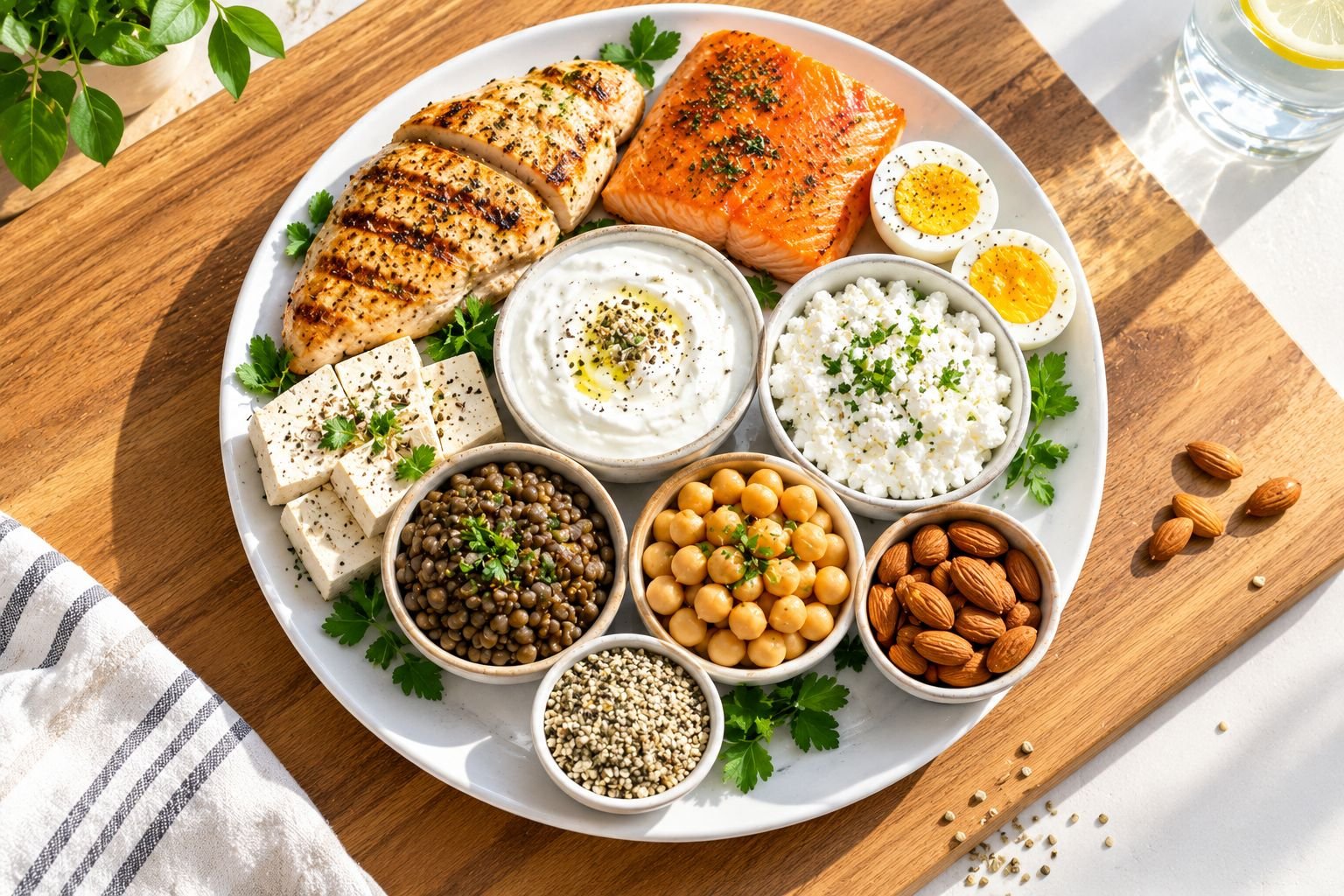
- Animal sources: chicken, beef, fish, eggs, dairy, Greek yogurt
- Plant sources: soy, quinoa, hemp seeds, spirulina
**Incomplete Proteins** lack one or more essential amino acids:
- Legumes, grains, nuts, seeds (but eating different types covers you)
**Protein Quality Metrics** include:
- Biological Value (how much your body actually uses)
- Digestibility (how easily your body breaks it down)
- Amino acid profile (does it have the essentials?)
Animal proteins generally win on all these measures, but plant-based diets work fine when varied.
---
### How to Spread It Throughout the Day
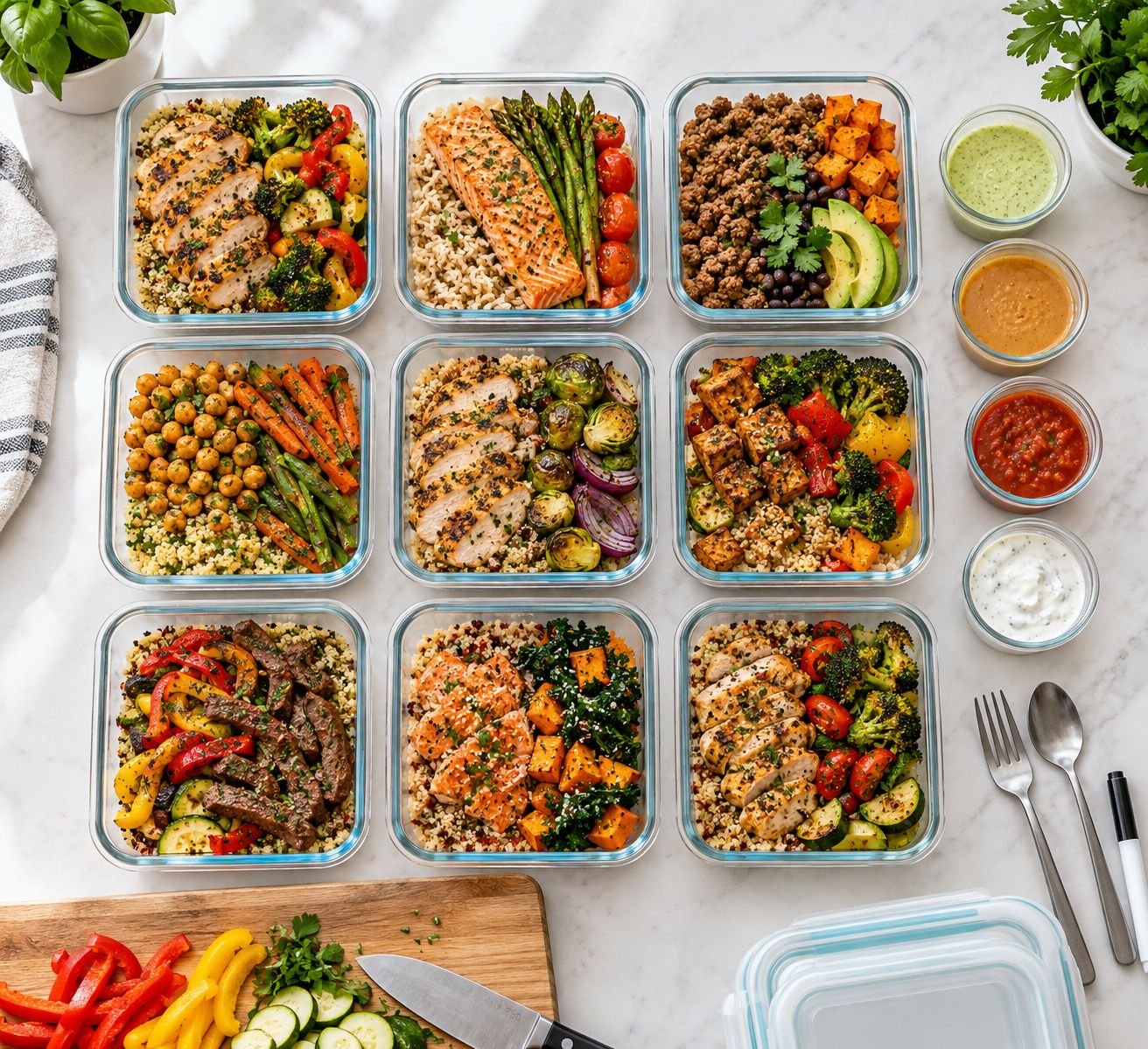
Here's a practical tip: your body can only use so much protein at once. Evidence suggests eating **20-40 grams per meal** (spaced 4-5 hours apart) maximizes muscle protein synthesis.
So instead of eating 100 grams at dinner, spread it:
- **Breakfast:** 30g (eggs, Greek yogurt, protein powder)
- **Lunch:** 35g (chicken, fish, legumes)
- **Dinner:** 35g (beef, salmon, tofu)
- **Snack:** 20g (nuts, cheese, protein bar)
---
### Can You Eat Too Much Protein?
The short answer: probably not, unless you're talking about extreme amounts.
The old myth was that high protein damages your kidneys. Science has largely debunked this in healthy people. Studies show consumption up to 2.5 g/kg body weight poses no risk for folks with normal kidney function.
**Real concerns with excessive protein:**
- It can crowd out other nutrients if it's *all* you eat
- It's more calories (4 per gram), which matters for weight management
- Some people report digestive issues or constipation with very high intake
---
### The Bottom Line
Want a simple formula? Here's what actually works:
1. **Find your baseline:** 0.8g per kilogram of body weight
2. **Add for activity:** +0.2-0.4g/kg for each level of increased activity
3. **Adjust for goals:** Higher intake for muscle gain, especially during weight loss
4. **Track for 2-3 weeks:** See how you feel, how your energy is, and how your body responds
5. **Adapt:** Everyone's different—some thrive at 1.2g/kg, others do better at 1.8g/kg
And remember, hitting your protein target matters way less than consistency. Getting close most days beats perfectly hitting it sometimes.
---
### Practical Examples
**Example 1: 150-pound sedentary office worker**
- Baseline: 54g per day
- Reality: Probably fine, but 60-70g gives a safety margin
**Example 2: 180-pound person doing CrossFit 3x weekly**
- Baseline + activity: 95-145g per day
- Target: 120g daily
**Example 3: 200-pound strength athlete training 5+ days weekly**
- High activity + muscle building: 145-200g per day
- Target: 170-180g daily
**Example 4: 130-pound woman doing yoga and jogging**
- Light activity: 100-110g per day
- Target: 105g daily
---
### Making It Practical
You don't need to obsess. Simple habits:
- Eat protein at every meal (chicken, eggs, fish, tofu, Greek yogurt, cottage cheese)
- Snack on protein-rich foods (nuts, cheese, hard-boiled eggs)
- Consider a protein powder if whole foods don't work for you
- Track for a week to see where you actually land
---
### Final Thoughts
The "right" amount of protein isn't one-size-fits-all, but it's also not complicated. Start with the formulas, see how you feel, and adjust. Most people land somewhere between 1.2 and 2.0 grams per kilogram of body weight, depending on activity level.
The best protein intake is the one you can actually maintain. Perfect consistency beats perfect precision every time.
https://www.hostinger.com/pk?REFERRALCODE=khanit
Promocodes : KhanIT
https://cp.gthost.com/en/join/803585de87b3603d0c871cab8bf73978
Frequently Asked Questions
How do I comment on a Articlesblog article?
Scroll to the Comments section at the bottom of any article, enter your name, email, and message, and click Post Comment. No account is needed, but every comment is moderated — it appears publicly only after the editorial team approves it. See the Privacy Policy for how details are handled.
Why hasn't my comment appeared?
Comments are held for review by default. If yours has not appeared, it is still pending or was rejected during moderation; approved comments appear on the article automatically. If it has been waiting more than a day or two, send a note through the contact page.
How do I share a Articlesblog article?
Every article has a share bar with buttons for Facebook, X, Pinterest, LinkedIn, WhatsApp, Threads, Instagram, TikTok, and YouTube, plus a Copy Link button. Clicking a button opens that network's share window with the article link and title already filled in.
How does Articlesblog pick related articles?
The Related Articles sidebar and the More to Read section show up to four other published articles from the same category, ranked by view count, with popular articles from elsewhere on the site added when the category is new. Tags under each article link to related searches.
Does an article show when it was last updated?
Article pages show the author, publish date, reading time, and view count. A separate last-updated date is not displayed at present, so treat the publish date as the article's currency. Ask the team about a specific article's revision history via the contact page.


Comments (0)
Be the first to comment!
Leave a Comment